Contact us for
 0
0
SHOPPING CART
SGD 0.00
 133 New Bridge Road, Chinatown Point #10-03 Singapore 059413
  +65 9061 2851 (Whatsapp) 24 Hrs
  contact@aceglobalaccountants.com


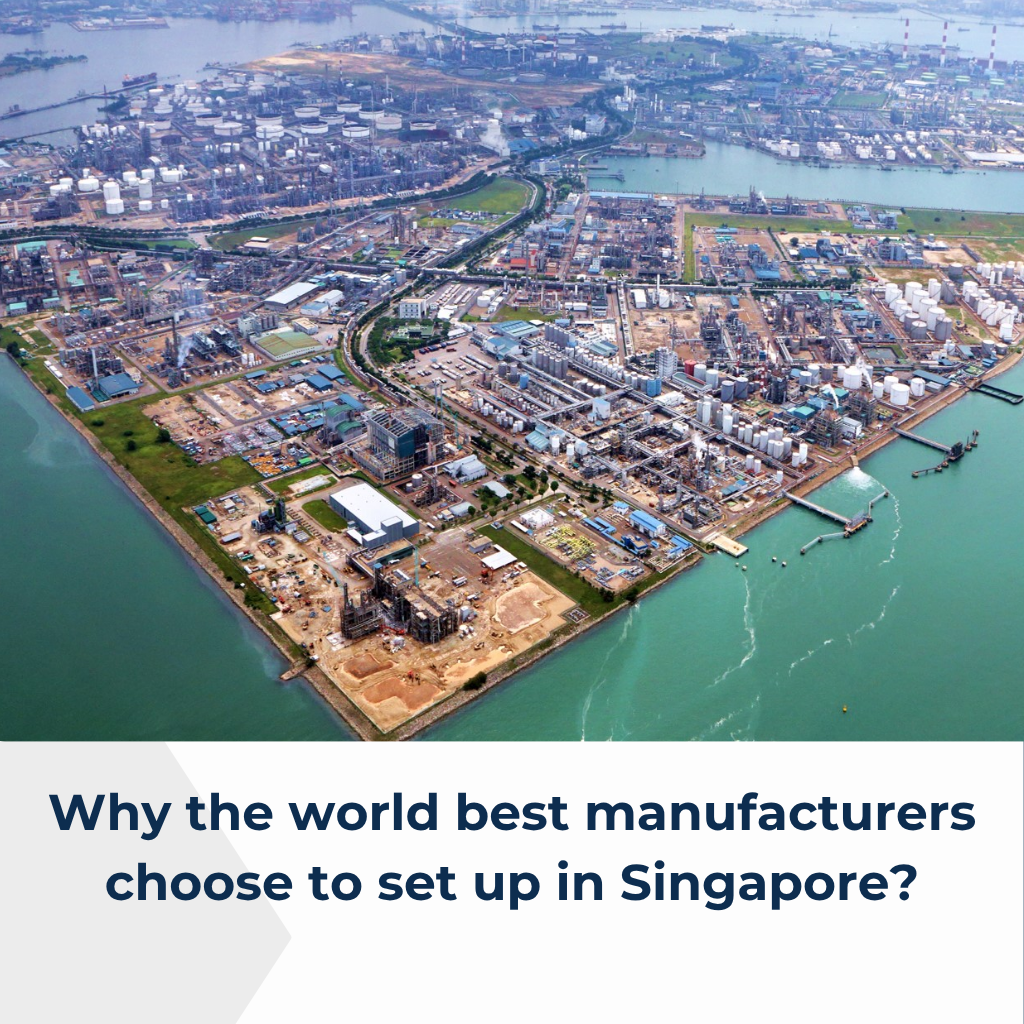
Singapore isn’t just a place to manufacture. It’s a competitive advantage.
Semiconductors. Aerospace. Biomedical sciences. Specialty chemicals. Singapore’s manufacturing sector sits at the heart of global supply chains — and year after year, the world’s most sophisticated manufacturers keep choosing to build here.
Why? It comes down to five things: infrastructure engineered for high-tech production, deep R&D and innovation capabilities, a ready ecosystem of industry partners, access to regional markets, and talent that matches the ambition of global manufacturers.
Here’s exactly what’s on offer, and how to make it work for your business.
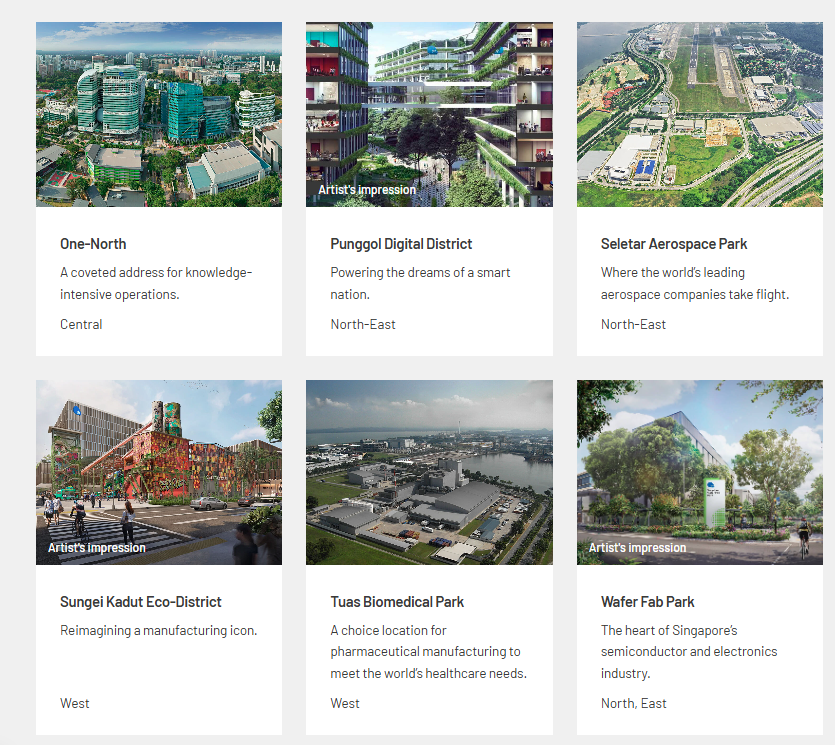
JTC manages more than 80% of industrial land in Singapore, comprising prized industrial estates such as Jurong Island, One-North, Jurong Innovation District and Punggol Digital District (Source: JTC)
You can think of Singapore’s industrial landscape as a series of purpose-built nodes. Each one is engineered for a specific sector. Each one is plugged into shared infrastructure, integrated logistics, and a dense ecosystem of partners.
All estates are developed and managed by JTC Corporation, Singapore’s public agency for industrial development. Power, water, waste management, high-speed connectivity — it’s pre-built. You show up and produce from day one.
JID is Singapore’s flagship advanced manufacturing estate. Five interconnected precincts. Research institutes, capability developers, technology providers, training bodies, and factories of the future — all co-located in one place.
The latest addition, Bulim Square (completed October 2025), adds over 1.2 million sq ft of purpose-built factory space. It features the world’s first 11km Sky Corridor and an underground District Logistics Network — designed to move goods efficiently while cutting surface traffic.
Singapore’s first business park fully integrated with a university campus. Home to AI, robotics, cybersecurity, and FinTech companies. Where academia, government, and industry actually work side-by-side — not just in brochures.
One of the world’s largest chemicals export hubs. Over 100 top energy and chemicals firms. Now pivoting into new energies, low-carbon technologies, and specialty chemicals to meet where global demand is heading.
For manufacturers with exacting requirements:
Over 400 companies. 15 research institutes. Six universities. Plus LaunchPad — a dedicated seven-block space for startups, incubators, accelerators, and venture capital firms.
Singapore has consistently invested at least 1% of GDP into Research, Innovation and Enterprise — every year.
The new RIE2030 masterplan commits S$37 billion to advanced manufacturing priorities: semiconductors, biomedical sciences, sustainability technologies, and quantum computing.
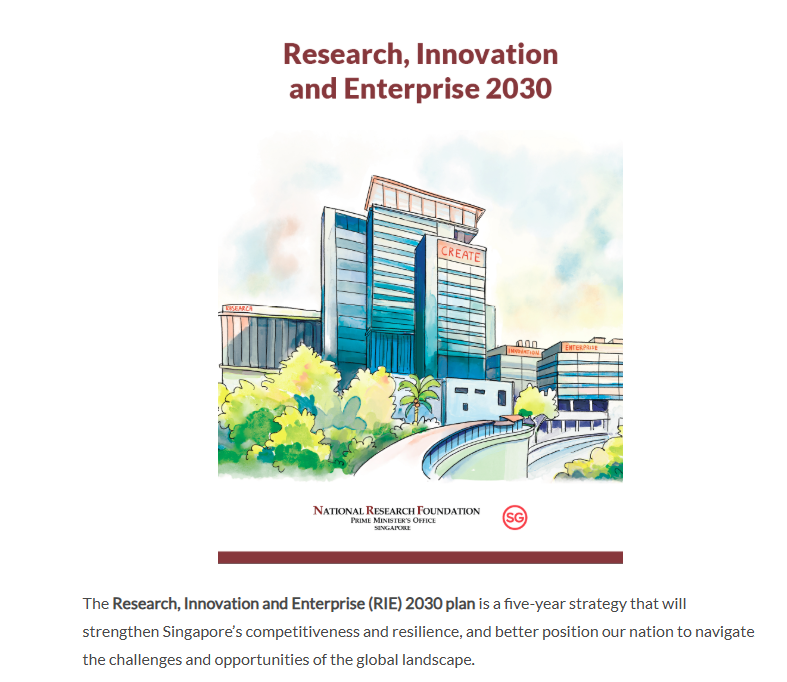
The Research, Innovation and Enterprise (RIE) 2030 plan (Source: The NRF Singapore)
But what makes Singapore’s R&D ecosystem different isn’t just the money. It’s the connective tissue.
A*STAR (Agency for Science, Technology and Research) runs industrial-scale sandboxes where companies co-develop factory-ready solutions with over 90 consortium members. Their Advanced Remanufacturing and Technology Centre (ARTC) has already rolled out more than 100 solutions in autonomous systems, industrial AI, and intelligent inspection.
Real-world impact? Coca-Cola’s Singapore facility co-innovated with A*STAR ARTC to introduce automation and digital tools that boosted labour productivity — and earned recognition as a World Economic Forum Global Lighthouse Factory.
For AI-specific manufacturing use cases, the Sectoral AI Centre of Excellence for Manufacturing (AIMfg) develops pre-trained foundation models that manufacturers can fine-tune with their own data. Less time building from scratch. Faster deployment.
No manufacturer operates alone. And in Singapore, you don’t have to.
The ecosystem here spans contract manufacturers, precision engineering firms, local suppliers, and industrial automation specialists, all within close proximity.
This density matters: it shortens supply chains, improves resilience, and speeds up time-to-market.
To illustrate the point, you can see three examples of what real MNC-local partnerships look like bwlow:
Through Singapore’s Aerospace Open Innovation Challenge, local AI startup Antomation collaborated with Airbus to build Cargo Cobra — an automated baggage and cargo handling system using machine vision and snake-inspired flexible loading technology.
The result: faster aircraft turnaround, improved worker safety, and a scalable solution for airports worldwide.
Since 2010, Singapore-based precision manufacturer Meiban has partnered with world-leading heart valve company Edwards Lifesciences.
The collaboration evolved from contract manufacturing to co-design and development of new tooling for Edwards’ surgical and critical care product lines — delivering speed-to-market improvements and significant cost savings for Edwards, while establishing Meiban’s position in medical devices.
The Smart Manufacturing Joint Lab, established by A*STAR, Rolls-Royce, and SAESL, has deployed 18 advanced technologies across aerospace MRO operations, achieving over 20% productivity gains.
It has also opened doors for over 200 Singapore SMEs, generating S$4.5 million in immediate business opportunities and qualifying eight enterprises as approved vendors in global supply chains.
Singapore’s value isn’t limited to its own borders.
For manufacturers that need to scale production cost-effectively across Southeast Asia, Singapore serves as the trusted anchor: a base for global and regional headquarters, high-value R&D, and innovation — while neighbouring regions offer abundant land, competitive labour, and a growing industrial base.
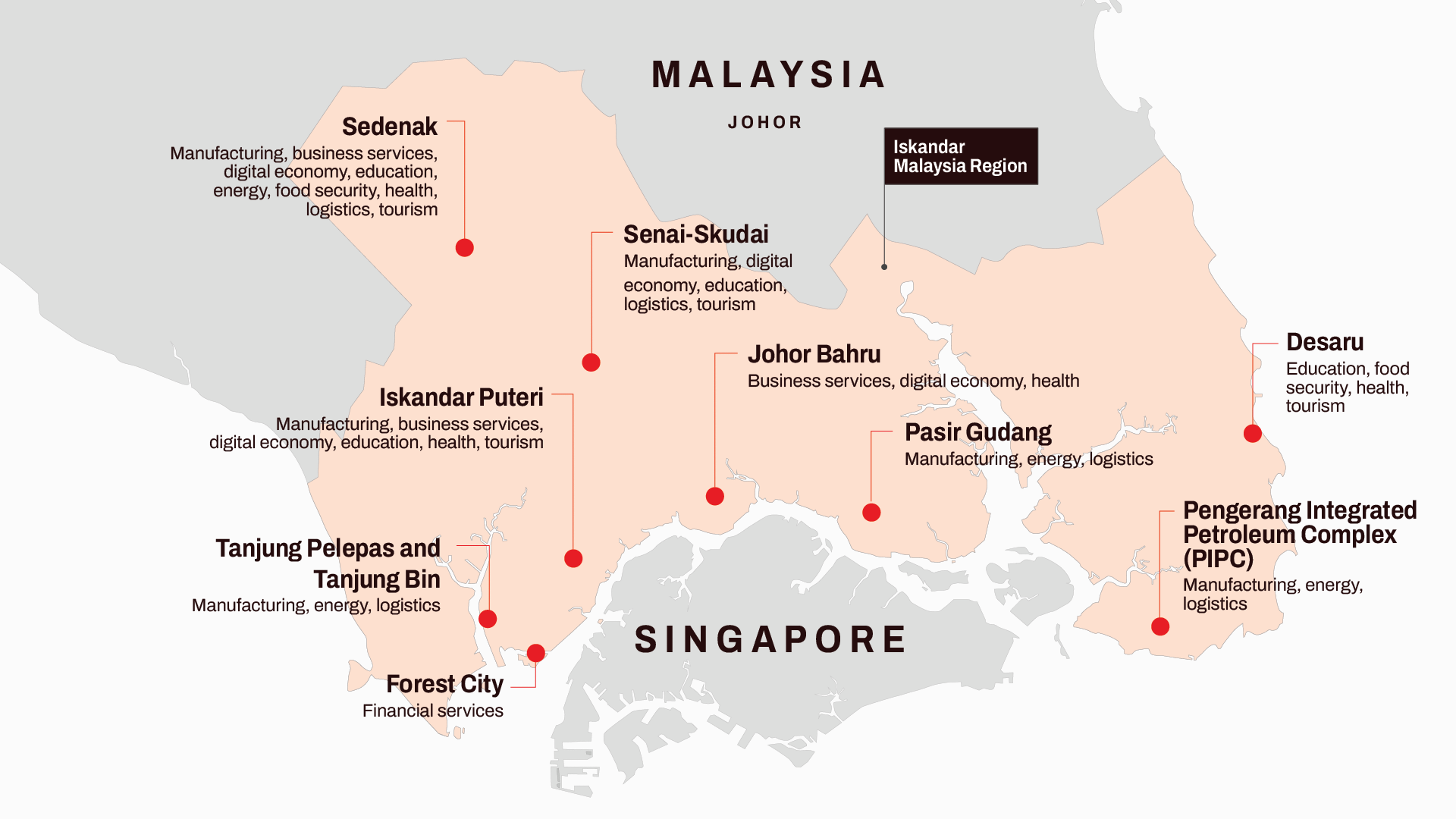
Launched in January 2025, the JS-SEZ spans over 3,500 km² across Southern Johor and is designed to deepen economic integration between Singapore and Malaysia. It gives manufacturers the best of both: Johor’s scale and cost competitiveness, Singapore’s connectivity and governance.
Cross-border mobility is improving fast. The Rapid Transit System between Singapore and Johor is expected by end-2026, and passport-free QR clearance is now live at land checkpoints.
To learn more about he JS-SEZ, you can read our in-depth guide here: How JS-SEZ improves supply chain resilience for businesses
Over 20 industrial parks, with increasing focus on low-carbon estates tailored to advanced manufacturing and data-intensive operations. This includes the Sembcorp Tembesi Innovation District, backed by a solar facility of up to 200 megawatts.
Singapore offers a layered set of financial incentives to support manufacturers at every stage of growth:
These incentives aren’t stacked paperwork. They’re practical tools that reduce your cost of entry, your R&D spend, and your workforce transformation burden.
Getting into Singapore’s manufacturing ecosystem starts with two decisions: your company structure and your industrial location.
Both decisions have lasting consequences. The right structure determines your tax exposure, your ability to access incentives, and how quickly you can bring in the talent you need.
The right industrial estate determines your operational efficiency, your proximity to partners, and your long-term expansion options.
This is where we come in.
Company incorporation in Singapore
We help foreign manufacturers incorporate the right entity in Singapore — whether that’s a subsidiary, branch office, or representative office.
We handle the end-to-end process: entity selection, registration, opening bank accounts, applying for relevant licences, and navigating MOM work pass requirements for your key hires.
Most incorporations are completed within 1–3 business days. We make sure you’re structured correctly from day one — so you’re eligible for grants and incentives, not locked out of them.
IndustriallLand and Key estates
Finding the right industrial space in Singapore isn’t just about price per square foot. It’s about being in the right ecosystem.
We help you identify and secure the best-fit industrial land or facility across Singapore’s key estates:
We work with JTC, landlords, and industrial property specialists to match you to spaces that fit your operational requirements, budget, and growth runway.
If your company needs help filing taxes for the year 2026 or requires assistance with Singapore incorporation, economy, banking, etc., feel free to call /WhatsApp us at +65 90612851 or email us at aceglobalacct@gmail.com. Alternatively, you may leave us a reply using our contact form below.
Keep in touch to receive the latest listing, news updates and special offers delivered directly to your inbox.