Contact us for
 0
0
SHOPPING CART
SGD 0.00
 133 New Bridge Road, Chinatown Point #10-03 Singapore 059413
  +65 9061 2851 (Whatsapp) 24 Hrs
  contact@aceglobalaccountants.com


 For most of robotics history, the hard problem was movement. Get a machine to walk, balance, navigate a warehouse, that was the frontier for two decades. That frontier has mostly been solved.
The next one is harder: getting a robot to touch the world the way a person does.
Sharpa, a Singapore-based robotics company founded in 2024, has built its entire business around that problem, what its team calls “the manipulation bottleneck.” In under two years, it’s reached unicorn status, unveiled a robot that ran an unassisted eight-hour shift at CES 2026, and signed partnerships with Nvidia, Unitree, A*STAR, JTC, and Grab.
None of that happened in Silicon Valley or Shenzhen. It happened in Singapore.
That’s not a coincidence. It’s the result of a specific set of ecosystem conditions that founders building hardware, deep tech, and embodied AI companies can actually replicate in their own expansion decisions.
In this article, you’ll learn what those conditions are, how Sharpa used them, and what to look for if Singapore is on your shortlist for a regional or global base for your robotics starups.
Embodied AI is artificial intelligence that operates inside a physical body: a robot, a hand, a machine that has to sense and act in the real world, not just process text or images.
It’s the difference between a model that can describe how to pour a drink and a robot that can actually do it without spilling.
Sharpa’s approach centers on a dexterous robotic hand called Wave, paired with a proprietary AI system called CraftNet. Wave mirrors the shape and range of motion of a human hand. CraftNet layers three systems on top of it:
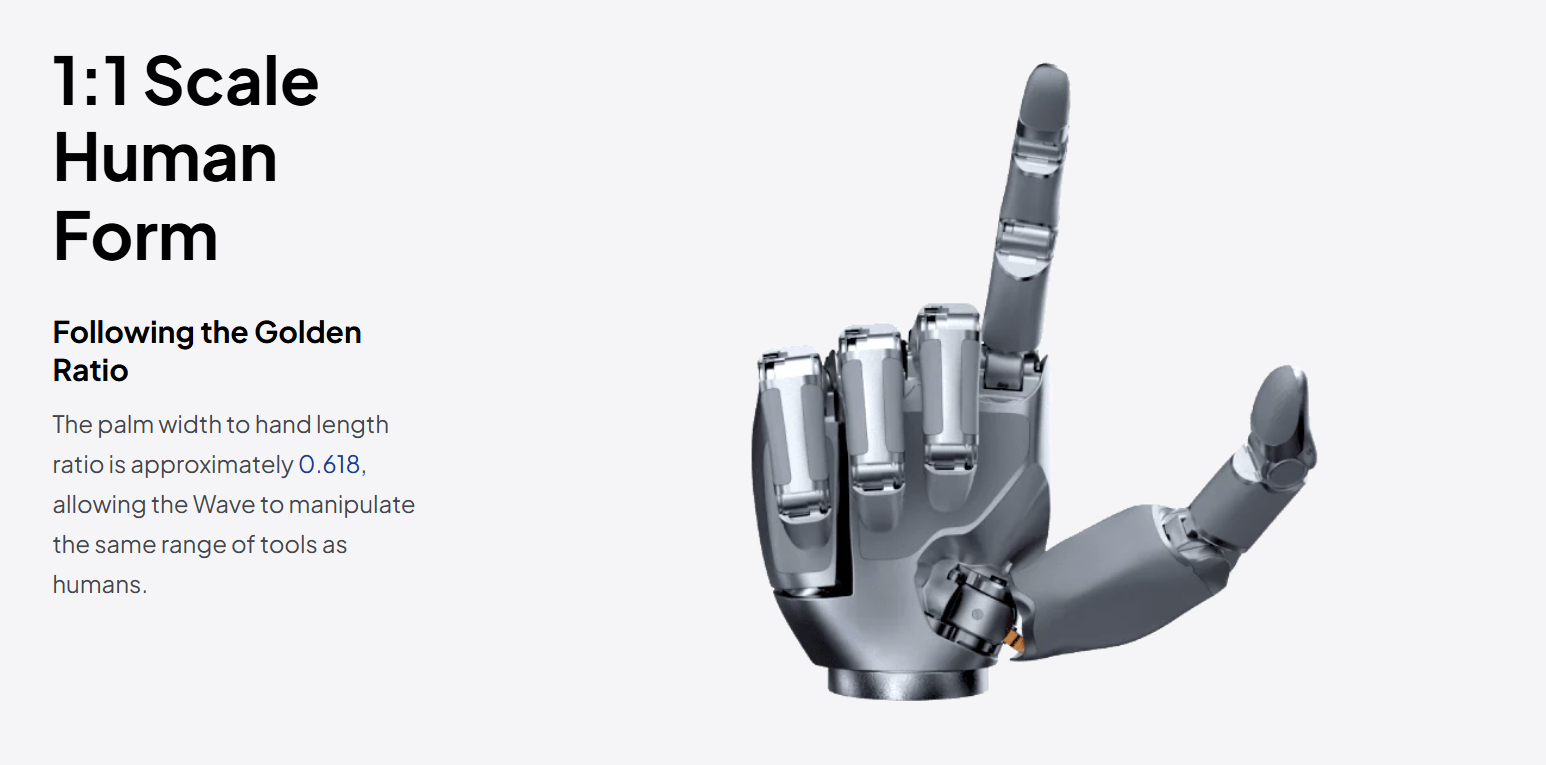
Sharpa Wase (Source: Sharpa)
That combination: physical dexterity plus real-time tactile intelligence is what Sharpa’s flagship robot, North, used to run unsupervised eight-hour shifts on fine manipulation tasks at CES 2026.
It’s a hard technical problem. But it’s also, increasingly, a location problem. You can’t build this kind of company purely in a lab. You need manufacturing supply chains, research partners, real-world deployment sites, and specialized talent, all within reach of each other.
That’s the gap Singapore is positioned to close.
Sharpa’s founder, David Li, didn’t choose Singapore for tax incentives or a single flashy grant. He chose it because five separate pieces of infrastructure line up in one place.
Plenty of countries offer robotics grants. Fewer offer a system where the pieces actually talk to each other.
Li points to Singapore’s pattern of building solutions ahead of problems, citing an ageing population and looming labor shortages as an example the government moved on early, rather than reacting to after the fact.
For Sharpa, that shows up as coordination, not just funding: university research on one side, deployment partnerships on the other, and connective tissue in between from bodies like A*STAR and the National Robotics Programme.
Pro tip: When you’re evaluating a market for a hardware or robotics base, don’t just ask “what’s the grant?” Ask who connects you to your first paying customer once the grant runs out. That’s the harder problem most ecosystems don’t solve.
This is also why Singapore’s approach tends to hold up better over a multi-year build. A grant is a one-time event. A coordinated ecosystem where a research introduction from A*STAR leads naturally into a pilot with an industrial partner, which then feeds data back into your product compounds. Each stage makes the next one easier to close, instead of leaving you to rebuild momentum from zero every time you move to a new phase.
Sharpa doesn’t just recruit from Singapore’s universities. It works with them directly, supplying Wave hands to academic teams researching dexterous manipulation and co-authoring papers with them.
That’s a meaningfully different relationship than a typical university partnership. It means Sharpa’s core hardware is being stress-tested and validated by outside researchers, not just its own internal team — which matters enormously in a field moving as fast as embodied AI, where isolated development risks becoming outdated within a product cycle.
Sharpa is explicit that it doesn’t count lab success at 90% reliability as success at all.
Through partnerships with JTC and Grab, the company is piloting F&B and retail deployments in Punggol Digital District, treating Singapore as a proving ground before rolling solutions out elsewhere. Separately, work with A*STAR’s Institute for Infocomm Research is exploring embodied AI for port operations, including container-handling tasks that are physically demanding and often performed in harsh conditions.

Punggol Digital District (Source: JTC)
These aren’t demo environments. They’re commercial operating conditions, with the edge cases, real data, and reliability pressure that no lab can simulate.
Ask most founders what “good talent” means and you’ll get a vague answer. Sharpa’s is specific.
The company is actively hiring across three profiles in Singapore:
That specificity matters. Singapore’s universities — National University of Singapore and Nanyang Technological University among them — have invested heavily in AI research, and government bodies including A*STAR, IMDA, and the National Robotics Programme have worked to concentrate that talent rather than let it disperse.
For a hardware company, the mechatronics-plus-AI combination is the scarce one. It’s also the one Singapore has been building toward deliberately.
Singapore’s role for Sharpa isn’t limited to R&D and piloting. It’s positioned as the operational hub for the company’s next phase, as North becomes commercially available to enterprises by the end of 2026, starting with the service industry.
Strong global connectivity, deep integration into regional supply chains capable of producing robotic components cost-effectively, and a stable regulatory framework combine to make Singapore a launch point into the rest of Asia — not a destination in itself.
That’s the difference between a market you test in and a market you scale from.
Sharpa is an extreme case, a unicorn with headline partnerships and a CES stage. Most founders evaluating Singapore aren’t there yet.
But the underlying pattern applies at any stage:
None of this replaces the operational groundwork of actually setting up in Singapore — incorporation, banking, work pass strategy for AI scientists and engineers you’re relocating, and compliance as you scale headcount. That groundwork is what determines whether you can act on the ecosystem advantages fast enough to matter.
It’s also where most founders lose time they didn’t budget for. Opening a corporate bank account, structuring an entity that can hold IP cleanly, and getting Employment Pass approvals for specialized hires all take longer when they’re handled reactively instead of planned alongside your ecosystem strategy from day one.
The ecosystem advantages above only compound if the operational foundation underneath them is solid. That’s where Ace Global comes in.
For a robotics or embodied AI founder setting up in Singapore, that foundation typically covers:
If your company needs help filing taxes for the year 2026 or requires assistance with Singapore incorporation, economy, banking, etc., feel free to call /WhatsApp us at +65 90612851 or email us at aceglobalacct@gmail.com. Alternatively, you may leave us a reply using our contact form below.
Keep in touch to receive the latest listing, news updates and special offers delivered directly to your inbox.