Contact us for
 0
0
SHOPPING CART
SGD 0.00
 133 New Bridge Road, Chinatown Point #10-03 Singapore 059413
  +65 9061 2851 (Whatsapp) 24 Hrs
  contact@aceglobalaccountants.com


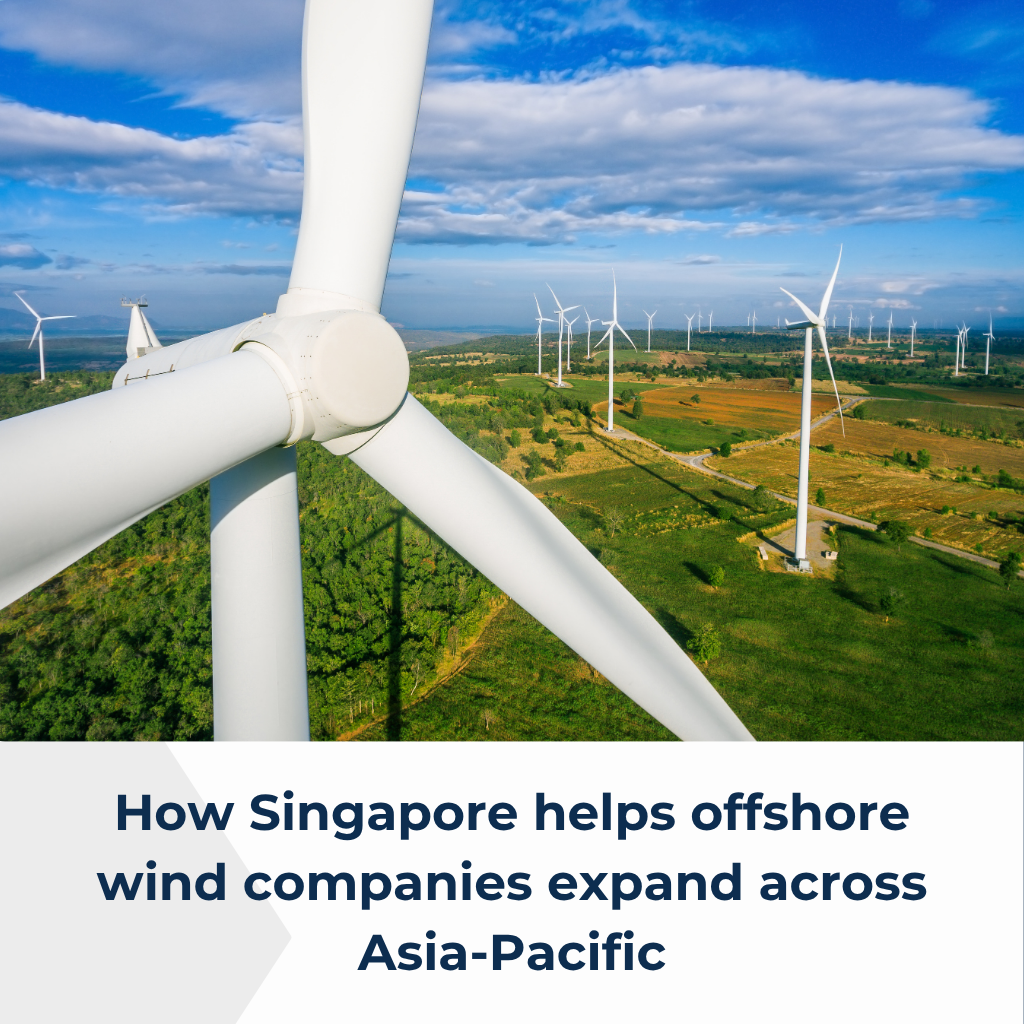
Singapore doesn’t have a single offshore wind farm. And yet it’s on track to become Asia Pacific’s offshore wind hub.
Singapore built its offshore oil and gas industry over five decades, shipyards, marine engineers, subsea specialists, geotechnical labs. Offshore wind runs on almost identical infrastructure. So instead of building wind farms, Singapore built the supply chain that builds them.
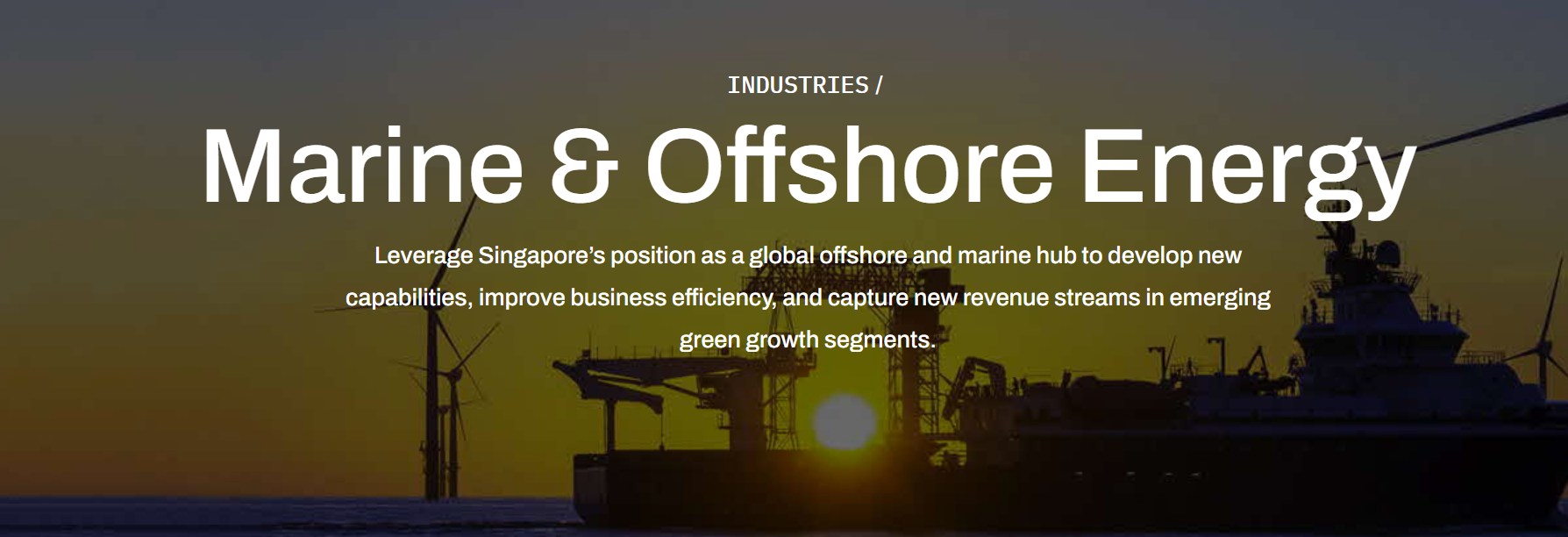
Singapore’s Marine & Offshore Energy sector
Today, more than 1,000 establishments sit inside Singapore’s Marine & Offshore Energy sector. Companies like Seatrium, Mooreast, and BeeX are already working on offshore wind projects in the UK, Japan, Korea, and beyond, without a single turbine in Singapore waters.
In this article, you’ll learn exactly which capabilities Singapore offers, which companies are already proving the model, and how you can position a company to tap into this ecosystem.
Offshore wind and offshore oil and gas share the same core problem: how do you build, install, and maintain heavy infrastructure in open water? Singapore already solved that problem.
Marine engineers who once designed oil rigs now design offshore wind substations. Vessel operators who once served drilling platforms now build wind turbine installation vessels. The skills transferred almost directly.
Pro tip: If your company already serves offshore oil and gas, offshore wind isn’t a new industry to break into. It’s an adjacent market for capabilities you likely already have.
Three things make Singapore specifically well-suited as a base:
Add it up, and you get a country positioned to serve offshore wind supply chains across the region, even without hosting a single wind farm itself.
Offshore wind is gaining momentum across Asia Pacific because countries need cleaner ways to meet rising energy demand. Unlike onshore wind, offshore projects sit at sea, where wind speeds run stronger and more consistent, which means more electricity generated per turbine, and a bigger role for lower-carbon energy in the region’s power mix.
None of that momentum shows up as turbines off Singapore’s coast. It shows up as contracts, vessels, and engineering work flowing through Singapore-based companies instead.
Before you build or position a company here, you need to know where the real opportunities sit. They fall into four categories:
Each one is already occupied by a Singapore company proving the model works. Let’s go through each example to better understand the market, and how you can enter the market your own way.
Seatrium is the clearest example of what “reinventing offshore capabilities” looks like in practice.
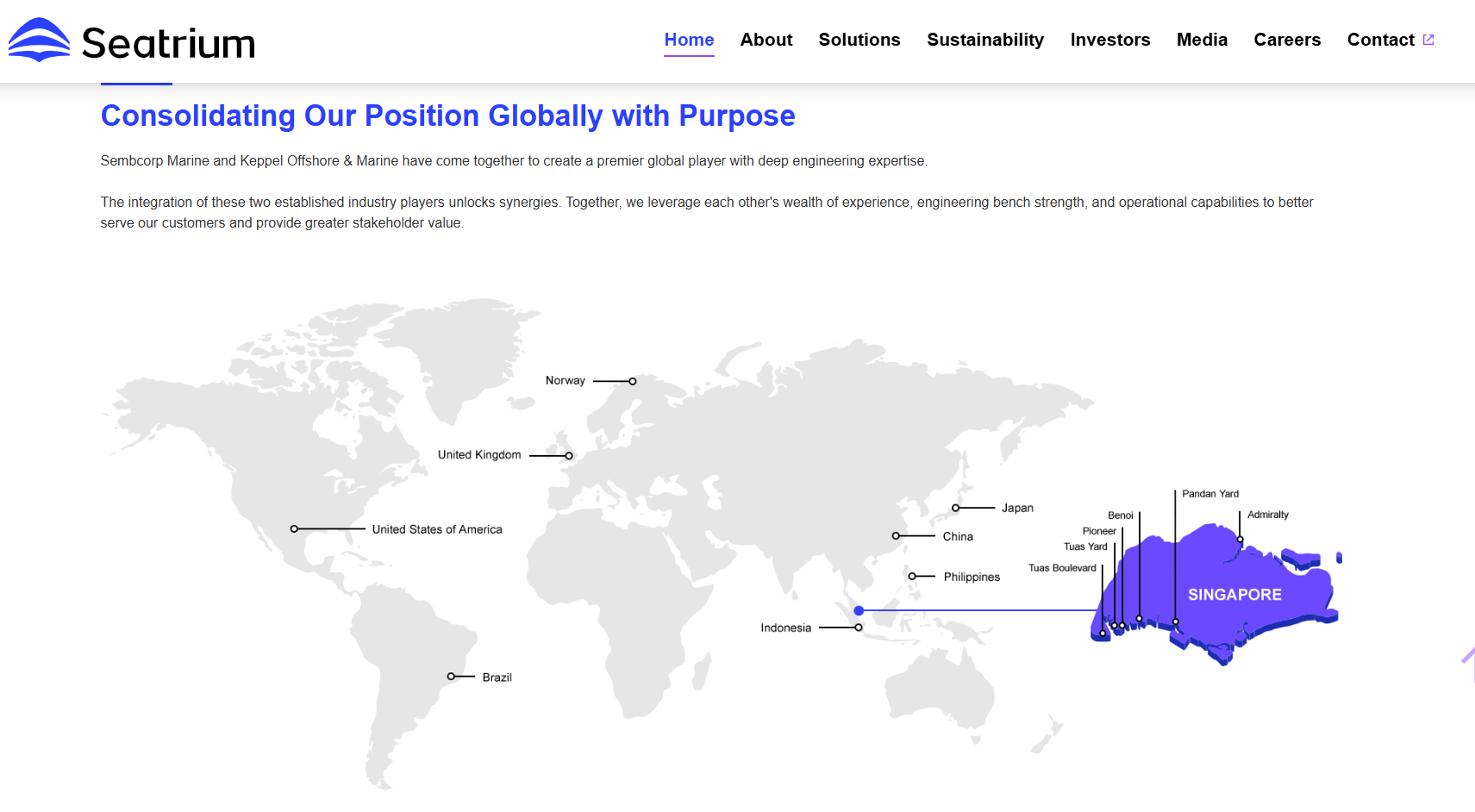
Seatrium operations (Source: Seatrium website)
The company evolved from marine and offshore oil and gas work into building offshore substations and offshore wind support vessels, including wind turbine installation vessels and heavy-lift vessels.
The numbers are hard to ignore:
That’s nearly two decades of compounding experience, built entirely on capabilities that started in offshore oil and gas.
Fixed-bottom wind turbines only work in shallow water. Floating platforms unlock deeper water, which is most of Asia Pacific’s offshore wind potential.
That’s where Mooreast comes in.
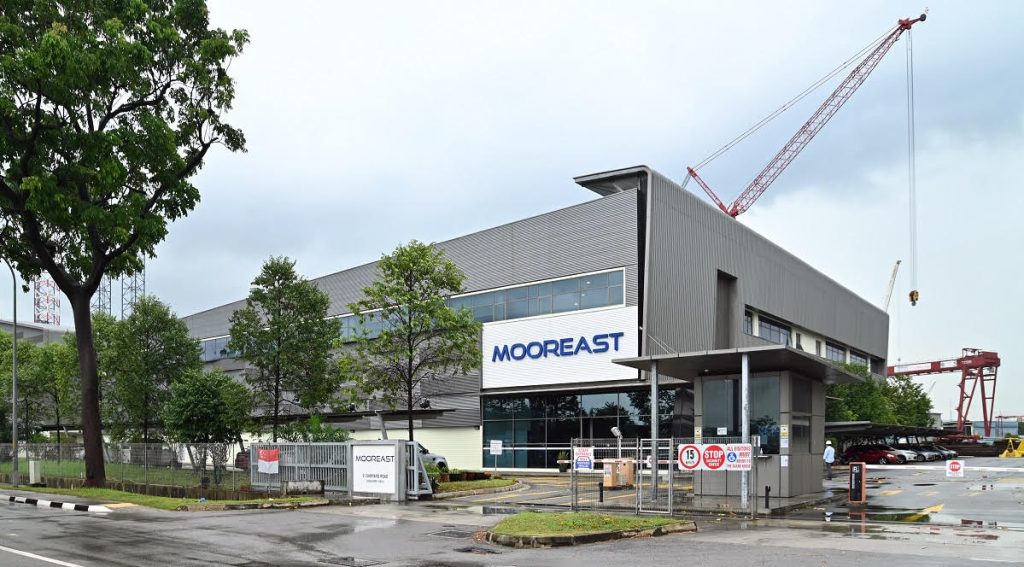
Mooreast Holding Ltd in Singapore (Source: Mooreast website)
Mooreast supplies mooring systems that keep floating platforms stable at sea. Its technology has been deployed on demonstration projects in Japan, including the early Fukushima Forward project.
Since then, Mooreast has expanded its footprint across Japan’s green energy programme:
A floating wind and current hybrid power generation system, developed with offshore and marine company MODEC
A floating wind project in Kitakyushu, delivered for Japan’s New Energy and Industrial Technology Development Organisation (NEDO)
Floating wind is still an emerging segment globally. Companies that build a track record now — the way Mooreast has, are positioning themselves ahead of a market that’s about to scale sharply across Asia Pacific.
Every offshore wind farm starts underwater. Before a single foundation goes in, developers need marine soil investigation, seabed surveys, and geotechnical testing.
Two Singapore companies show what this looks like as a standalone business line.
Geonamics provides marine soil investigation, geotechnical laboratory testing, and foundation testing for offshore energy and critical infrastructure across Singapore, Malaysia, and ASEAN.
It has completed over 1,000 marine investigation boreholes, delivering the ground and seabed data developers need for safe design, construction, and foundation verification.
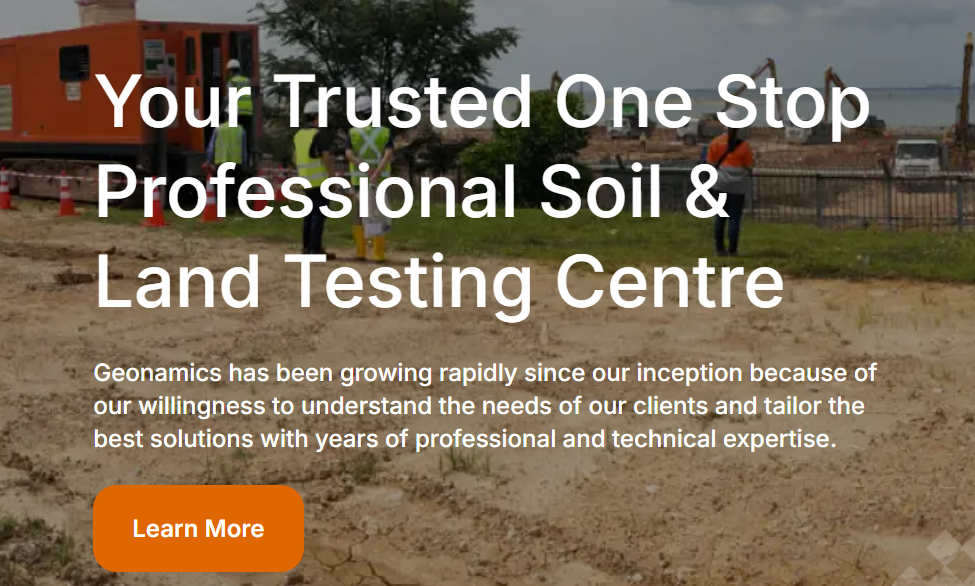
Geonamics operations (Source: Geonamics website)
SA Geolab specialises in advanced soil testing that unearths the data offshore wind developers need for geotechnical investigations. It didn’t stop at Singapore. SA Geolab opened a 22,000-square-foot geotechnical laboratory in Busan, South Korea, in collaboration with the Busan-Jinhae Free Economic Zone Authority and Busan Metropolitan City — built specifically to test soil behaviour at Korean offshore wind farm sites.
Notice the pattern in both examples: neither company builds turbines. They built a specialised service, proved it in Singapore and the region, then followed the demand into new markets.
This is one of the more accessible entry points into offshore wind. It requires deep technical expertise, but not the massive capital outlay that vessel fabrication demands.
You don’t need to build offshore wind testing infrastructure from scratch. Singapore already has it.
The Technology Centre for Offshore and Marine, Singapore (TCOMS) brings researchers and industry partners together to develop and test technologies for challenging offshore environments. Its ocean basin simulates powerful waves and ocean conditions, letting companies test offshore systems before they’re ever deployed at sea.
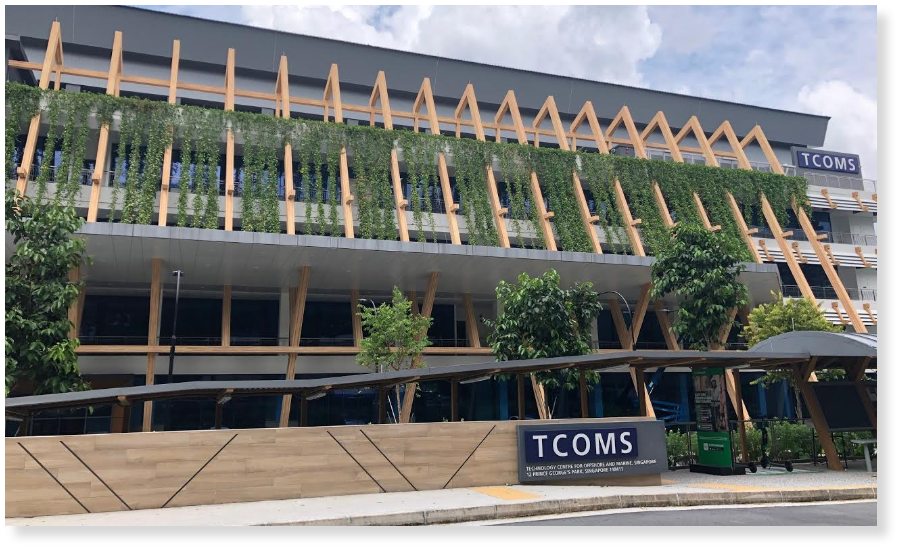
The Technology Centre for Offshore and Marine, Singapore (Source: TCOMS website)
TCOMS also supports:
For an early-stage or growing company, this matters because it removes one of the biggest barriers to entry: access to world-class offshore testing facilities without building them yourself.
Offshore wind doesn’t end at installation. Turbines, foundations, and inter-array cables all need ongoing inspection, and that’s an expensive, manpower-heavy job if you’re still using traditional methods.
BeeX has built a company around solving exactly this problem.
BeeX uses autonomous underwater vehicles (Source: BeeX website)
BeeX uses autonomous underwater vehicles (AUVs) to inspect subsea structures at offshore wind farms. Its drones have inspected foundations and inter-array cables beneath the sea surface at wind farms across Europe and Asia.
The results speak for themselves:
BeeX proves something important: you don’t need to fabricate steel or install turbines to build a serious offshore wind company. Software, robotics, and inspection technology are just as viable an entry point — arguably a faster one to scale.
None of the companies above built their offshore wind business alone. They’re plugged into a collective ecosystem.
The Association of Singapore Marine & Offshore Energy Industries (ASMI) brings industry players together to strengthen capabilities in offshore renewables and maritime decarbonisation. For a company trying to break into offshore wind, that kind of network accelerates everything — partnerships, subcontracting relationships, and visibility with developers scouting the region for suppliers.
Singapore is also investing directly in making itself the region’s meeting point for the industry.
Enterprise Singapore and the Singapore Tourism Board have partnered with RECHARGE and Hamburg Messe und Congress to bring a series of wind energy conferences and exhibitions to Singapore from 2026 to 2029. That includes the RECHARGE Wind Power Summit Asia-Pacific and the flagship WindEnergy Asia-Pacific in 2027 and 2029 — marking WindEnergy’s first expansion outside Europe.
That’s not a minor detail. It means global industry leaders, policymakers, financiers, and supply chain players will be showing up in Singapore, repeatedly, over the next several years.
Singapore’s offshore wind advantage isn’t about hosting wind farms. It’s about owning the supply chain that builds them, substations, mooring systems, geotechnical data, testing infrastructure, and inspection technology.
Companies like Seatrium, Mooreast, Geonamics, SA Geolab, and BeeX prove the model works across every stage of the offshore wind lifecycle.
You don’t need to overhaul your entire business to tap into this. Start small:
Singapore’s offshore wind ecosystem is still forming its next chapter. The companies positioning themselves now are the ones set to shape it.
That’s the real opportunity here. Offshore wind farms will keep going up far from Singapore’s shores. But the technologies, vessels, and expertise supporting them will keep running through Singapore’s ecosystem — and there’s still room for your company to be part of that supply chain.
If your company needs help filing taxes for the year 2026 or requires assistance with Singapore incorporation, economy, banking, etc., feel free to call /WhatsApp us at +65 90612851 or email us at aceglobalacct@gmail.com. Alternatively, you may leave us a reply using our contact form below.
Keep in touch to receive the latest listing, news updates and special offers delivered directly to your inbox.