Contact us for
 0
0
SHOPPING CART
SGD 0.00
 133 New Bridge Road, Chinatown Point #10-03 Singapore 059413
  +65 9061 2851 (Whatsapp) 24 Hrs
  contact@aceglobalaccountants.com


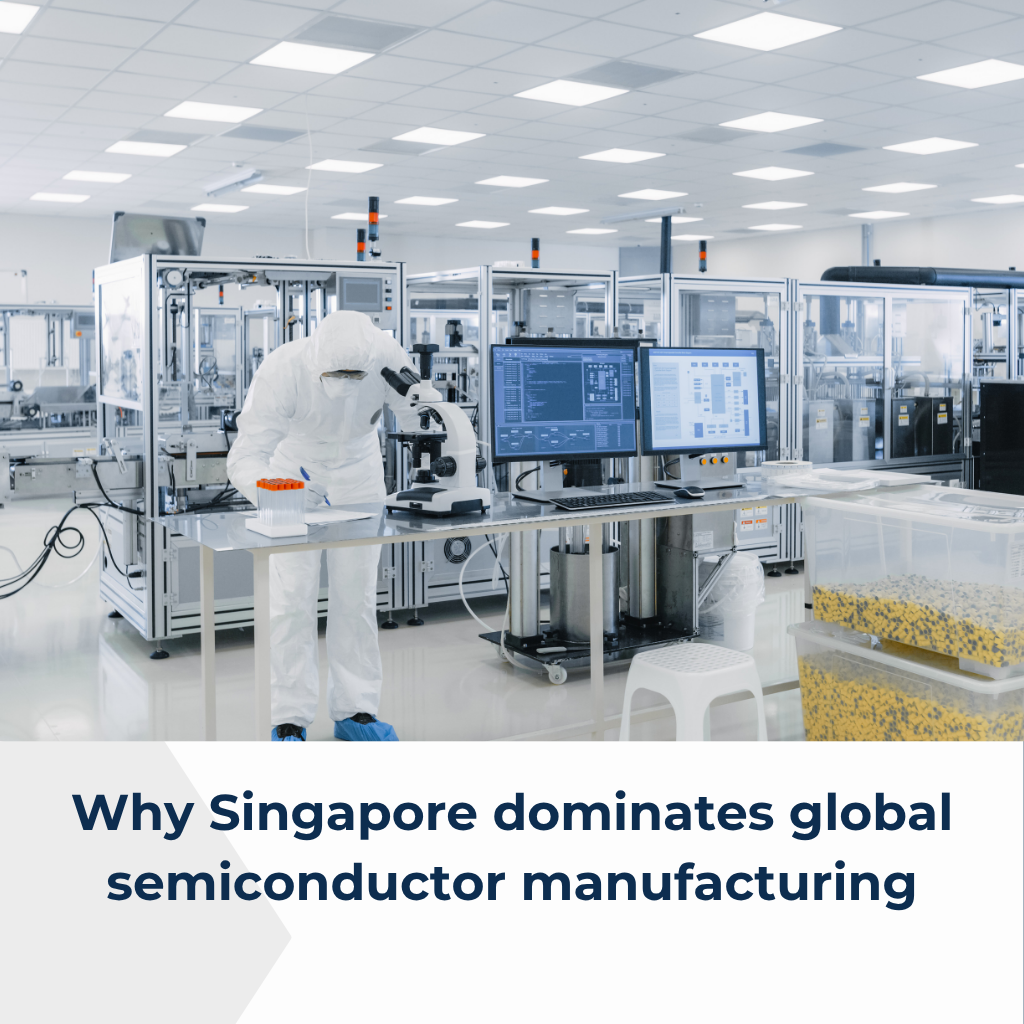
Singapore accounts for 1 in 10 chips produced worldwide. That’s a remarkable figure for a country of 6 million people with zero natural resources.
So how did Singapore become one of the most critical nodes in the global semiconductor supply chain — and why are companies like Micron committing US$24 billion to expand there?
The short answer: Singapore doesn’t wait for demand. It engineers supply.
Here’s exactly how Singapore engineered that outcome.
To understand why Singapore matters today, you have to understand where it started.
In the 1970s, Singapore was a low-cost destination for semiconductor assembly and testing. Companies came for cheap labor and a stable port. It was useful, but not irreplaceable.
Singapore’s government recognized the vulnerability of that position early. So it made a long-term bet: instead of competing on cost, it would compete on capability.
Over the next five decades, Singapore systematically moved up the semiconductor value chain, from assembly and testing into wafer fabrication, then IC design, and now advanced packaging and frontier R&D. Today, it hosts the full stack.
That transition didn’t happen by accident. It was the result of coordinated investment across infrastructure, talent, research, and ecosystem building — sustained across multiple governments and economic cycles.
The result: Singapore now produces 1 in 10 chips and 1 in 5 semiconductor equipment units worldwide. For a city-state of 6 million people, that is an extraordinary concentration of industrial capacity.
Here’s how most countries attract semiconductor investment: a company announces expansion plans, governments scramble to offer incentives, land gets zoned, utilities get planned, and three years later, maybe the groundwork is ready. Singapore works differently.
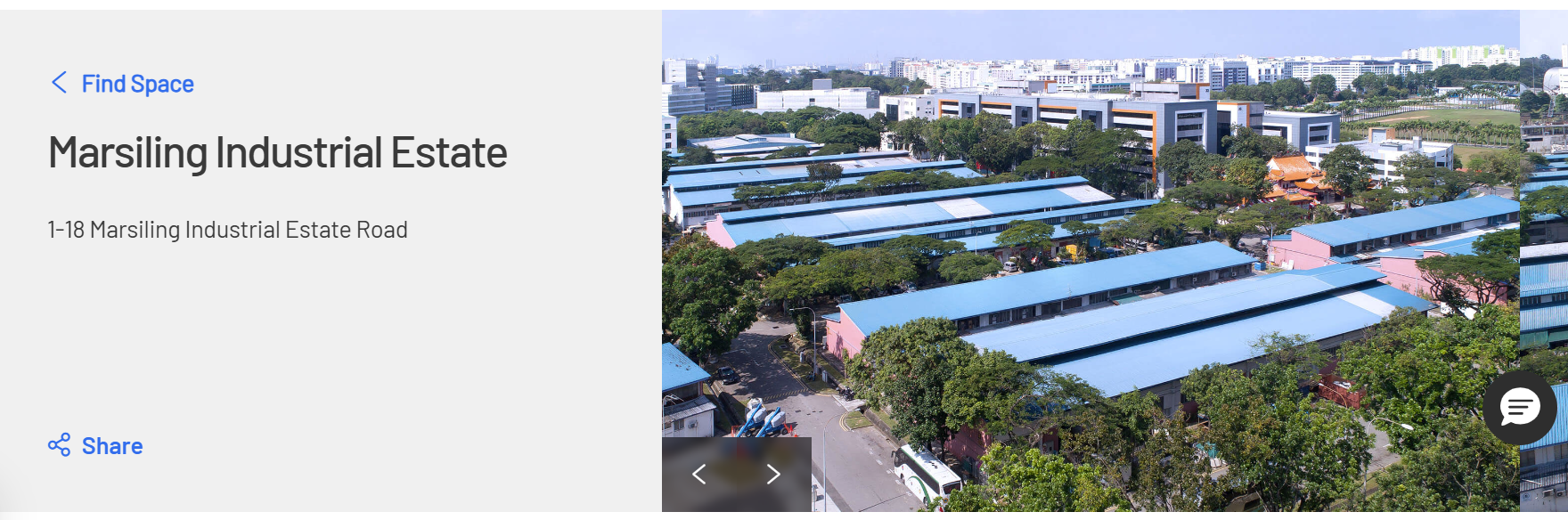
JTC — Singapore’s public agency for sustainable industrial estates — builds infrastructure before the demand arrives. That means vibration-tested industrial land, specialized utilities, and purpose-built wafer fab parks that are ready when companies are ready to move.
JTC, Singapore’s public agency for sustainable industrial estates (Image source: JTC website)
The payoff is significant. When a semiconductor company commits to a new fab, every month of construction delay costs money. Pre-built infrastructure compresses timelines. It removes the friction that kills momentum.
Today, Singapore operates four dedicated wafer fab parks housing 14 global semiconductor companies, including GlobalFoundries, Micron Technologies, SSMC, and STMicroelectronics. These aren’t generic industrial zones — they’re engineered specifically for the stringent requirements of high-precision semiconductor manufacturing.
This is what “investing ahead of demand” looks like in practice. And it’s one of the clearest signals to global companies that Singapore is serious, not just for the next project cycle, but for the long term.
Semiconductor manufacturing is technically demanding. You can build the best fab in the world and still fail if you can’t staff it.
Singapore’s workforce of over 35,000 semiconductor professionals didn’t happen by accident. It’s the result of a tightly coordinated talent system that connects government agencies, universities, polytechnics, and industry partners in a way that most countries haven’t managed to replicate.
Here’s what that looks like on the ground.
For young talent: The Singapore Industry Scholarships (SgIS) and Industry Postgraduate Programme (IPP), supported by more than 20 companies, create a direct pipeline from education into industry roles. In high-demand niche areas like IC design, EDB and SSIA run summer camps and a six-month industry-aligned training programme co-developed with Nanyang Technological University. These aren’t generic STEM initiatives — they’re targeted programmes designed around specific skills gaps the industry has flagged.
For mid-career professionals: Since 2016, nearly 3,000 mid-career workers have transitioned into semiconductor roles through structured training and career conversion programmes. This matters more than most people realize. When a new fab comes online, it needs experienced operators, not just fresh graduates. Singapore’s mid-career pipeline provides that.
For long-term curriculum alignment: ITE has signed MOUs with companies including GlobalFoundries, Micron, STMicroelectronics, Advanced Substrate Technologies, HOYA Electronics Singapore, and UTAC. The goal is structured internships, graduate recruitment, staff attachments, and joint curriculum projects — so what’s being taught in classrooms stays connected to what’s actually needed on the factory floor.
Micron has taken this further than most. Since 2023, they’ve partnered with five local polytechnics to scale internships, scholarships, bursaries, and expose teaching staff directly to advanced semiconductor manufacturing environments.
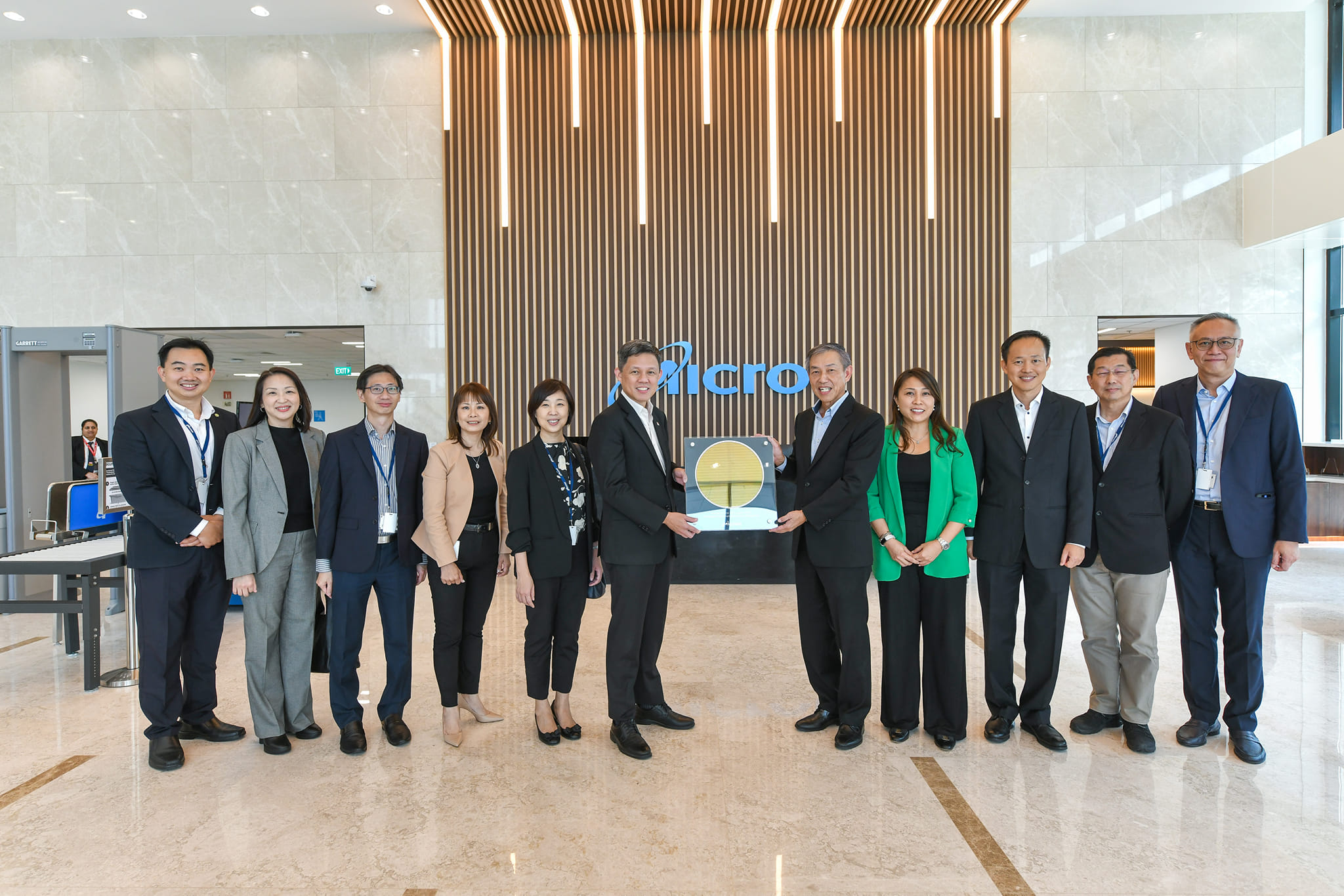
Micron Singapore signed a Memorandum of Understanding (MOU) with all five of our polytechnics (Image source: Chan Chun Sing post)
The result for companies: when you set up in Singapore, you’re not building a talent pipeline from scratch. You’re plugging into one that already exists and is actively maintaned.
Here’s the thing about semiconductor manufacturing: what’s cutting-edge today will be commodity in five years. Staying competitive means constantly investing in what comes next. Singapore understands this better than almost anyone.
Under its RIE2030 plan, Singapore will invest S$37 billion in research, innovation, and enterprise across strategic sectors. Semiconductors are explicitly identified as a priority — and the country has backed that up with a dedicated S$800 million RIE Flagship for semiconductors, led by A*STAR and EDB.
The four focus areas tell you exactly where Singapore thinks the next wave of semiconductor growth will come from:
All of this is reflected in where the world’s leading semiconductor companies are putting their money:
This is not a list of exploratory bets. These are long-term capital commitments from companies that have already operated in Singapore, stress-tested the environment, and decided to go deeper.
Singapore’s semiconductor dominance didn’t come from luck, geography, or a single policy decision.
It came from five decades of deliberate, sustained investment across every layer that matters: land, utilities, talent, research, ecosystem, sustainability, and technology adoption. Each layer reinforces the others.
Together, they create an operating environment that’s genuinely difficult to replicate.
With the global semiconductor market heading toward US$1.6 trillion by 2030, the companies that move fastest and smartest will define the next era of the industry. Singapore has spent 50 years making sure it’s the place where those companies want to be.
The investment numbers suggest it’s working.
If your company needs help filing taxes for the year 2026 or requires assistance with Singapore incorporation, economy, banking, etc., feel free to call /WhatsApp us at +65 90612851 or email us at aceglobalacct@gmail.com. Alternatively, you may leave us a reply using our contact form below.
Keep in touch to receive the latest listing, news updates and special offers delivered directly to your inbox.