Contact us for
 0
0
SHOPPING CART
SGD 0.00
 133 New Bridge Road, Chinatown Point #10-03 Singapore 059413
  +65 9061 2851 (Whatsapp) 24 Hrs
  contact@aceglobalaccountants.com


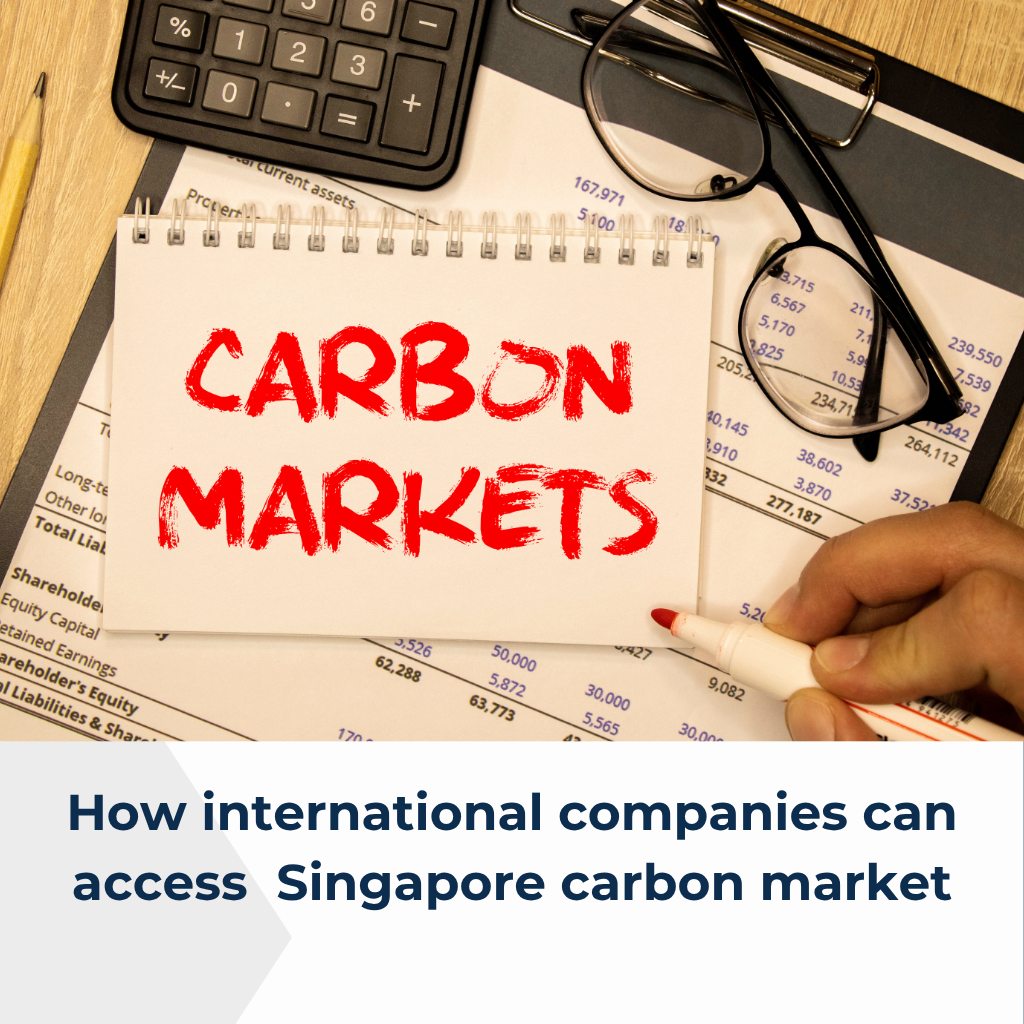
Five years ago, “carbon market hub” wasn’t a phrase anyone used about Singapore.
Today it is. The city-state is now home to more than 160 carbon services and trading companies — advisory firms, project developers, MRV platforms, and traders, all operating out of a single jurisdiction the size of a mid-sized city.
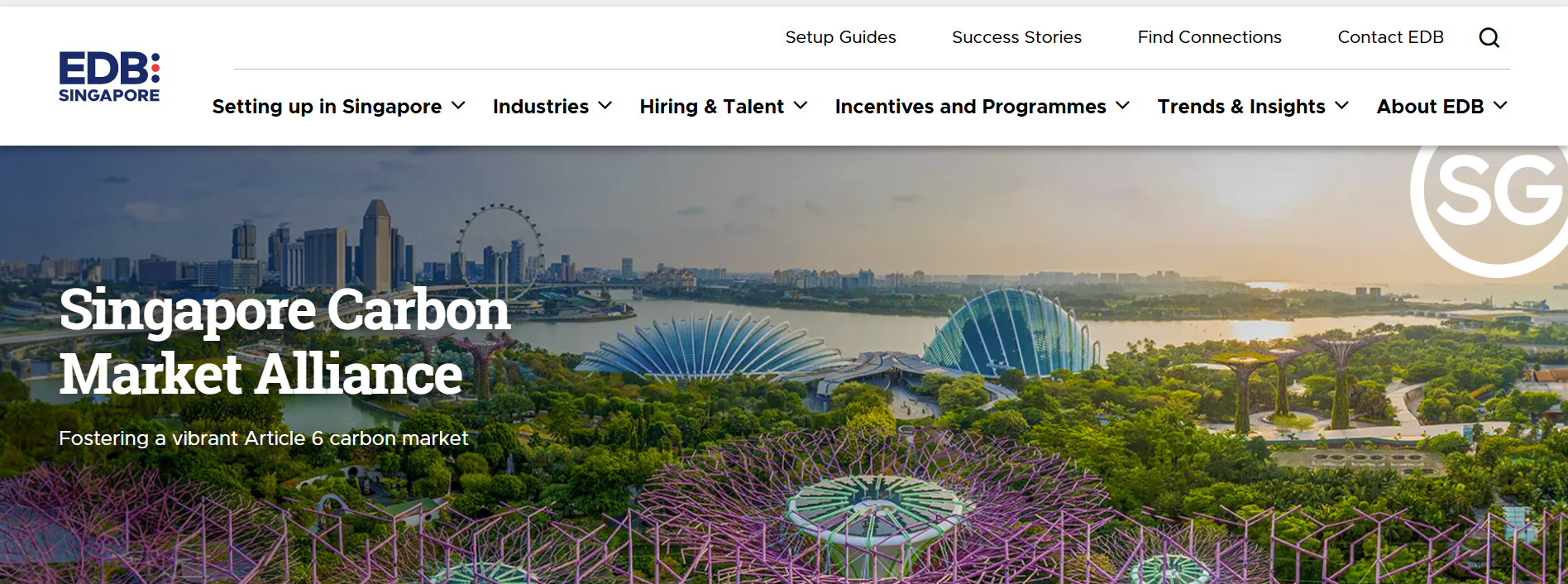
Singapore carbon market alliance (Source: EDB Singapore)
That’s not an accident. It’s the result of a deliberate three-year build-out: grants for project developers, innovation programs for measurement technology, and alliances that connect buyers with high-integrity credits.
For international companies, this raises a practical question. Not “should we care about carbon markets” most already do. The real question is how do you actually get in, and what does Singapore specifically offer that other jurisdictions don’t.
In this article, you’ll learn the three entry points into Singapore’s carbon market, who’s already using them, and what it takes for a foreign company to qualify.
The world is in the middle of a carbon market surge. Blue carbon, sustainable agriculture, and transition credits are all scaling across the region, but the projects generating those credits sit in Vietnam, Indonesia, Thailand, and beyond, not in Singapore itself.
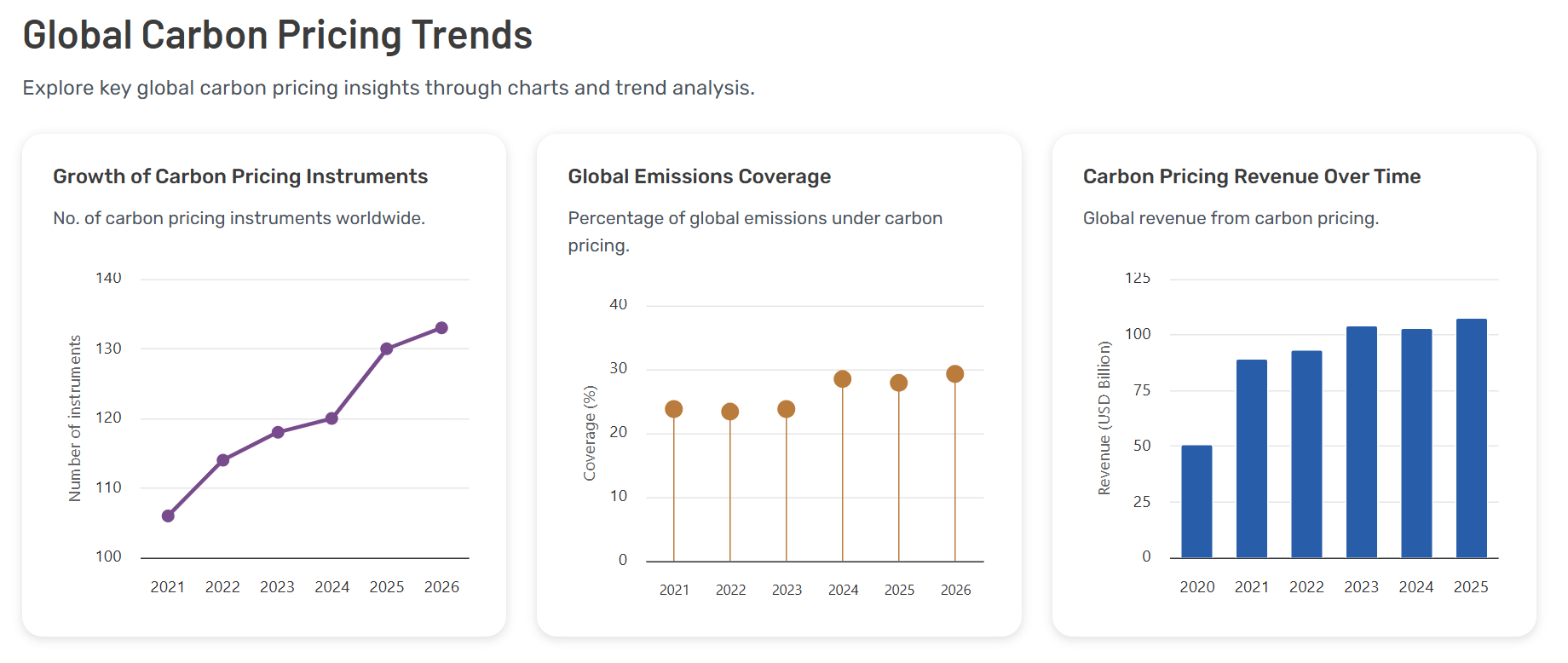
Global carbon pricing trends
Singapore’s play isn’t to host the projects. It’s to be the base companies operate from to access, develop, and scale them.
That distinction matters. Singapore has signed Implementation Agreements or Memorandums of Understanding on Article 6 carbon credit collaboration with multiple countries in the region. A company based in Singapore can use those agreements as a bridge into project markets it couldn’t access as easily on its own.
If your company already has carbon projects in Southeast Asia but no Singapore presence, you’re likely leaving grant funding, buyer networks, and MOU-backed market access on the table.
The most capital-intensive stage of any carbon project is the start: feasibility studies, monitoring system design, validation, and registration. Most projects stall right here, because the upfront capital isn’t there.
Singapore’s Economic Development Board (EDB) built a grant specifically for this gap.
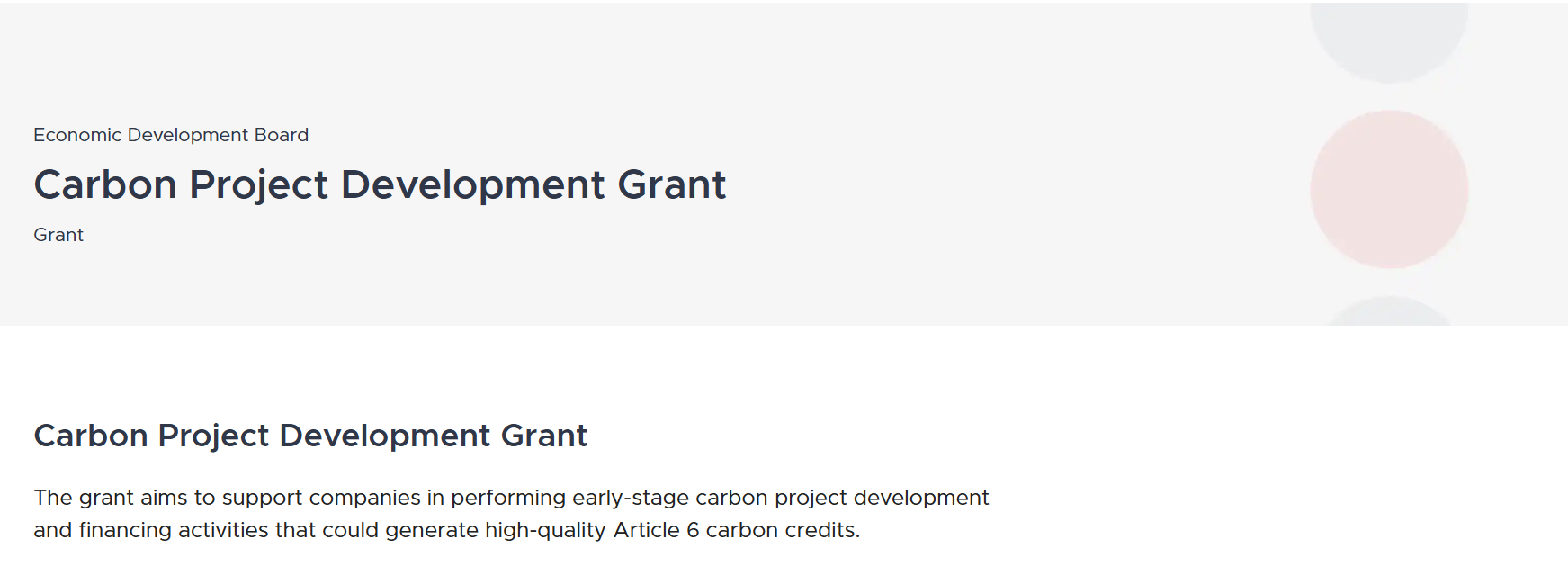
Launched in 2024, this grant supports Singapore-based companies engaged in early-stage project activities that lead to Article 6 credits.
It’s already funded real projects:
Here’s the part that matters for international companies: this grant is only available to Singapore-based entities.
It’s the reason a growing number of foreign carbon project developers are setting up a Singapore entity before they set up anything else
EDB also partnered with Temasek Trust’s philanthropic arm, TT Foundation Advisors, to launch a donor-advised fund that channels capital from foundations and family offices into the same pool of grantees — S$20 million at launch. It doesn’t create a new application track, but it does mean the organizations already backed by the Carbon Project Development Grant have a second funding source stacking on top.
Grant money solves the financing gap. It doesn’t solve the technical one.
Blue carbon projects — coastal wetlands that sequester more carbon than most forests — have struggled to scale for a different reason: measurement, reporting, and verification (MRV) is hard.
Without reliable data on carbon stocks and flux, buyers can’t trust the credits, and projects can’t get financed in the first place.
WWF-Singapore and aquaculture investor Hatch Blue launched Blue Catalyst, an open innovation challenge, in September 2025 specifically to solve this. The results show how competitive the space already is: 130+ applications from 37 countries, narrowed to 10 finalists who joined a two-week accelerator in Singapore.
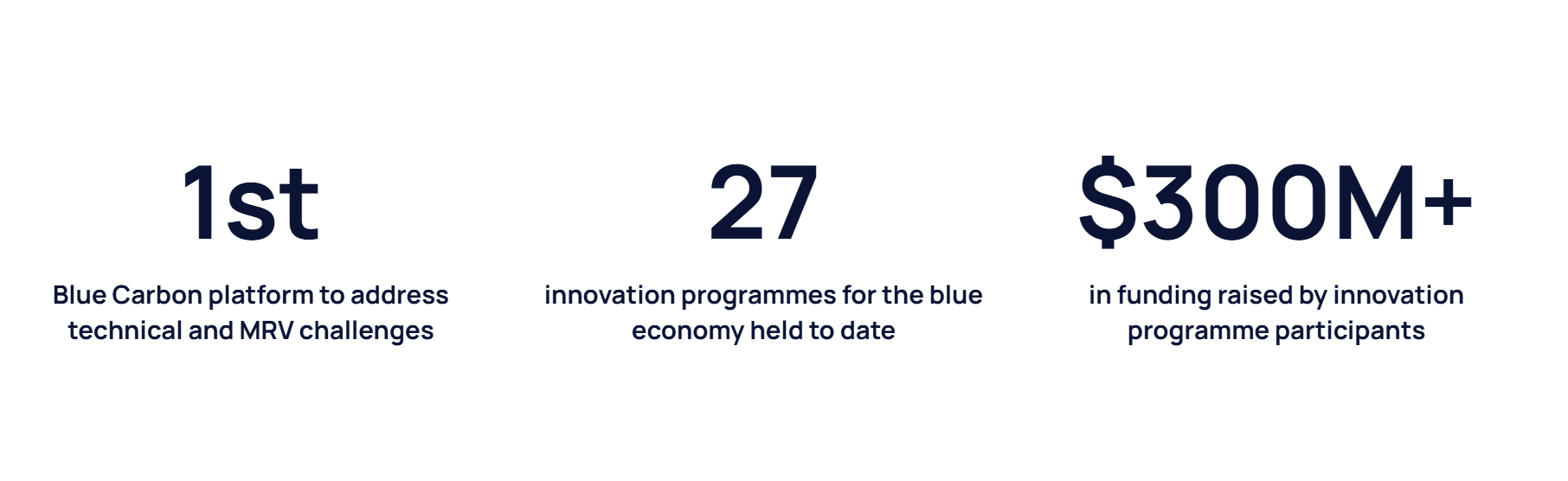
Blue Catalyst recognition
The finalists work across geospatial mapping, carbon stock and flux modeling, and biodiversity monitoring — the exact technical gaps blue carbon projects need closed. WWF-Singapore is now exploring deployment partnerships with several of them.
If your company builds MRV technology, remote sensing tools, or biodiversity monitoring systems, this is a direct signal: Singapore is actively recruiting solutions from outside its own borders, not just funding local ones.
Singapore’s National Space Agency also introduced a grant this year for research into satellite-based MRV for biomass projects. It’s aimed primarily at research institutes and universities, but explicitly encourages private-sector collaboration — another door for companies with remote sensing or data science capabilities.
Add to that Carbon Integrity SG, a S$15 million research program led by NUS’s Centre for Nature-based Climate Solutions, and you get a research infrastructure most jurisdictions in the region simply don’t have yet.
Financing and technology solve the supply side. Demand has its own problem: corporate buyers don’t trust what they’re buying.
Carbon credit purchases carry real reputational risk. Buy the wrong units — low integrity, poorly verified, double-counted — and the backlash lands on your brand, not the seller’s.
Singapore built two tracks to fix this: one for the compliance market, one for voluntary buyers.
| Mechanism | Who it’s for | What it does |
|---|---|---|
| Singapore Carbon Market Alliance (SCMA) | Corporates buying compliance-grade credits | Workshops, capacity building, direct connections to project developers |
| VCM Guidance | Companies using voluntary credits | Domestic clarity on what counts as a credible decarbonization claim |
| Coalition to Grow Carbon Markets | Governments and market participants | 10+ member countries aligned on shared quality principles |
| ARC Coalition | Corporates and institutions | Aggregates demand, channels financing, strengthens VCM credibility |
SCMA — launched by EDB with IETA in 2024 — exists to answer exactly the question a first-time buyer asks: which credits can I actually trust? It connects corporations directly with project developers instead of leaving them to figure out counterparties on their own.
On the government side, Singapore’s Ministry of Trade and Industry is working with the Singapore Cooperation Enterprise to help selling nations access carbon markets, backed by a US$15 million contribution to the Global Green Growth Institute’s Carbon Transaction Facility.
If your procurement team is nervous about voluntary credit quality, start with Singapore’s VCM guidance before you start vetting individual sellers. It sets the baseline your legal and sustainability teams will ask for anyway.
Put the three entry points together, and a pattern shows up: almost every mechanism — the grant, the alliance, the coalition access — assumes you already have a Singapore-based presence.
That’s the practical takeaway most articles on this topic skip. The carbon market opportunity isn’t something you access remotely. It’s something you access by incorporating.
For a foreign company, that typically means:
None of that is complicated on its own. It’s just easy to underestimate how much of Singapore’s carbon market access is gated behind “are you based here” rather than “is your project good.”
Singapore didn’t build a carbon market hub by chasing volume. It built one by closing three specific gaps — financing, technology, and trust — and it did that as a deliberate strategy, not a byproduct of its financial sector.
You don’t need to enter through all three tracks at once.
Start with the one that matches where you already are:
The common thread across all three is incorporation. Singapore’s carbon market infrastructure is built for companies that operate within it, which makes entity setup the first real decision. If you are ready to move forward, incorporating your own company should be your next step.
If your company needs help filing taxes for the year 2026 or requires assistance with Singapore incorporation, economy, banking, etc., feel free to call /WhatsApp us at +65 90612851 or email us at aceglobalacct@gmail.com. Alternatively, you may leave us a reply using our contact form below.
Keep in touch to receive the latest listing, news updates and special offers delivered directly to your inbox.